Roulette le Thuto ya Dipalo
Leotwana la roulette le dira gore kgonagalo e nne motlhofo go e akanya ka setshwantsho. Se ke ka fa lo ka le dirisang ka teng mo thutong lo sa kgothatse go betšha.
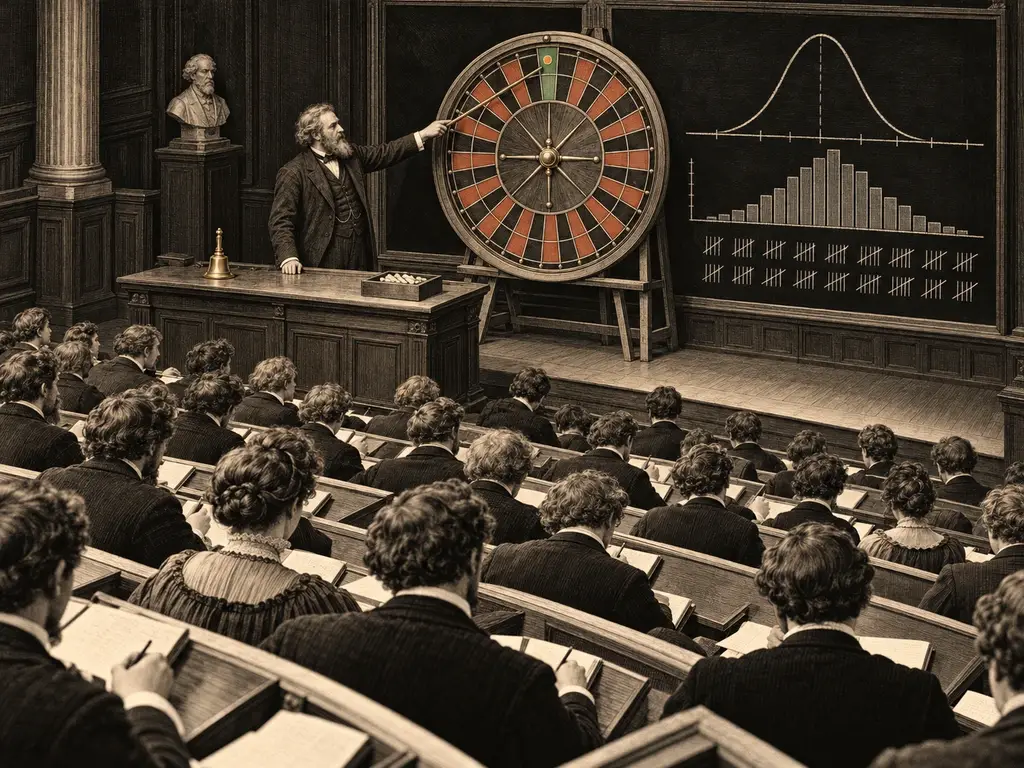
A model with 37 equally likely, independent outcomes connects counting, expectation, variancedipaloPharologanoSelekanyo sa ka fa maduo a anameng ka teng go dikologa boleng jo bo lebeletsweng. E kwa godimo mo straight up, e kwa tlase mo dibeteng tsa tekatekano.Bala yotlhe →, repeated events and hypothesis testing. State the assumptions, use simulated outcomes without real stakes, and distinguish a mathematical result from a claim about how students learn.
Gobaneng roulette
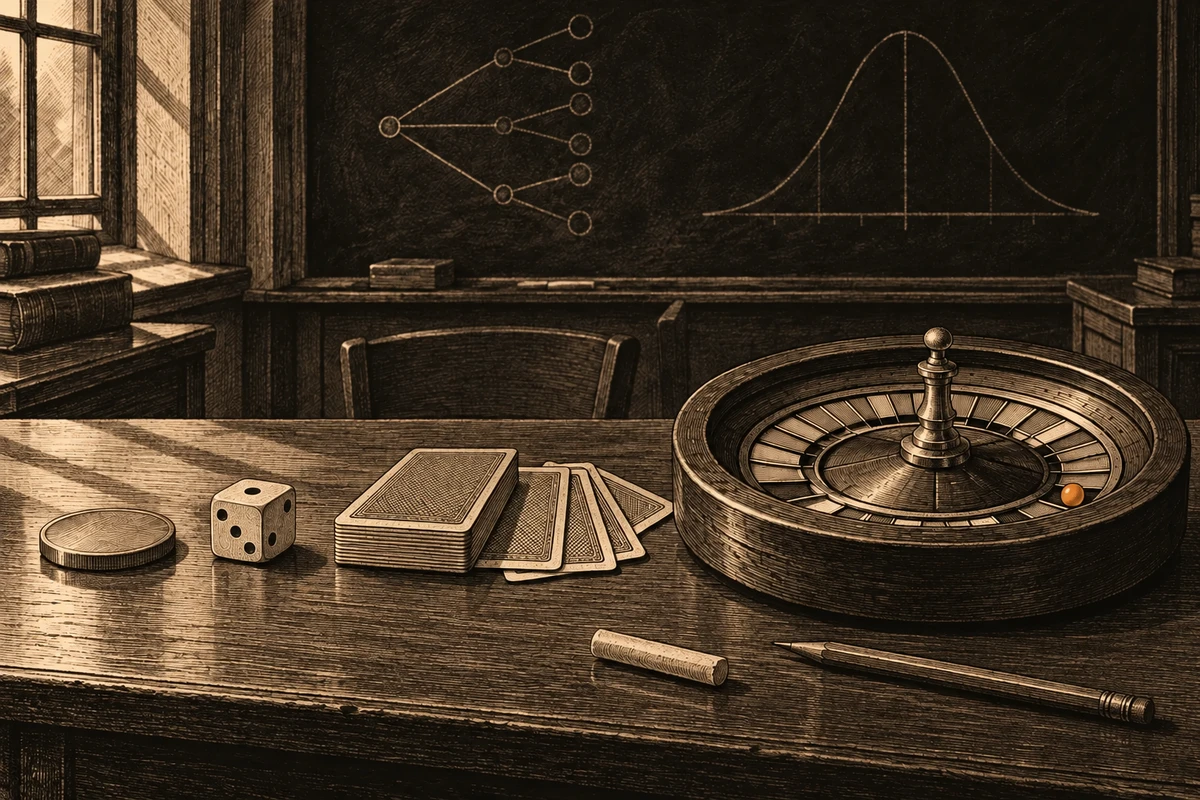
A fair single-zeroleotwanaLefelaPhaposi e le nngwe e tala e go seng bete ya tekatekano, ya dozen kgotsa ya kholomo e e e khupetsang; motswedi wa molemo wa khasino. Gape: lefela le le lengwe, 0.Bala yotlhe → roulette model offers 37 outcomes and a convenient payoutmadiTueloSe bete e e fentseng e se busang, se se bolelwang jaaka “X go 1” mo godimo ga peeletso e e busediwang.Bala yotlhe → formula. It is one example among many: coins, dice and cards can also illustrate probabilitydipaloKgonagaloTshono ya maduo, go tswa go 0 go ya go 1 kgotsa 0% go ya go 100%. Palo e le nngwe: 1/37 = 2.70%.Bala yotlhe →, repeated outcomes and statistical tests. Drawing cards with replacement gives a different model from drawing without replacement.
Uniformity and independence are assumptions to examine, not properties guaranteed by a wheel’s appearance. For a standard bet covering n numbers and paying 36/n − 1 unitsmadiYunitiPeeletso ya motheo e thulaganyo kgotsa motshameki a dirang ka yone. Dikgatelopele di tlhalosiwa ka diyuniti gore di dire kwa tafoleng epe.Bala yotlhe → of profit on a win, the expected net result per unit staked is −1/37. Special payouts and zero rules change that result.
Tatelano ya dithuto
Dikao tseno di tsaya gore maduo a mo go 0–36 a ikemetse e bile a na le kgonagalo e e lekanang, fa go sa bolelwa ka tsela e nngwe.
Go ruta kwa ntle ga go ruta go betšha
Keep real money out of the activity. A spreadsheet or a set of numbered tokens can reproduce the mathematics without a casino setting. Choose the framing for the learners and the institution; a negative-expectation explanation alone does not establish that a gambling-themed activity is suitable for every class.
Ask learners to state the sample space, payout and independence assumptions before calculating. A simulation illustrates variability; one losing session is not a proof that a system fails, and one winning session is not evidence that it works.
Boikatiso jo bo dirang
Compare predictions with calculations, without presenting invented guesses as classroom data. For the birthday problemdipaloBothata jwa letsatsi la matsaloGo tlhokega batho ba le kae pele ba babedi ba ka nna le letsatsi la matsalo le le tshwanang, kgotsa ditikologo di le kae pele palo e ka boelela. Mo leotwaneng la diphaposi di le 37, ditikologo di le 8 di lekane go nna le tshono e e fetang halofo.Bala yotlhe →, record the first repeat in several simulated sequences and compare the distribution with the exact model. Separate the probability of a repeat by a given draw from the expected waiting time.
For a multiple-comparisons exercise, generate many independent fair histories and record the largest pocketdidirisiwaPhaposiNngwe ya diphaposi di le 37 tse di nang le dipalo mo rotor. Gape: slot, cup.Bala yotlhe → count in each. Compare those maxima with the count for one pocket selected in advance. Shuffling a history preserves all pocket counts, so it cannot test whether a high count is unusual under a uniform model.
For staking systems, record the rules, bankrollmadiLetlole la go tshamekaMadi otlhe a a beetsweng go tshameka. Tsamaiso ya letlole ke go swetsa gore ke bokae jwa one jo o tla bo beelang kotsi mo beteng nngwe le mo motshamekelong mongwe.Bala yotlhe →, table limittafoleMoedi wa tafoleBete e nnye go gaisa le e kgolo go gaisa e e letleletsweng. E kgolo go gaisa ke yone e e emisang dikgatelopele tsa go menaganya.Bala yotlhe →, stopping condition and total amount wagered. Compare many runs with the appropriate mathematical expectation; do not assume every progressionleanoKgatelopele ya dibeteMolao ope o o fetolang peeletso go ya ka maduo a a fetileng. Dikgatelopele tse di tsholetsang morago ga ditatlhegelo di bidiwa negative, tse di tsholetsang morago ga diphenyo positive.Bala yotlhe → has a fixed session win rate.
Go Bala Dirikoto tsa Ditikologo tse di PhatlaladitswengBotlhokwa jwa Dipalopalo
Gobaneng e gopolwa
A worked example can connect an equation to observable outcomes. Whether this setting improves learning or retention would require educational evidence; anecdotes about memorable casino stories do not establish that. Ask learners to explain the assumptions and transfer the method to a neutral example, such as numbered tokens drawn with replacement.
Dipotso
No. Follow the institution’s requirements and the learners’ needs. Neutral numbered outcomes can teach the same mathematics without a gambling setting.
Define the sample space and independence assumptions, calculate a simple expectation, then compare repeated simulated results. The House EdgedipaloMolemo wa khasinoKarolo ya peeletso nngwe le nngwe e khasino e e tshotseng ka palogare: 2.70% mo roulette ya Yuropa.Bala yotlhe → and Variance pages provide worked examples.
Ga o na madi a nnete, ga o na diakhaonte mme ga o na dikgolagano le batsamaisi.
Metlae ya go iketla
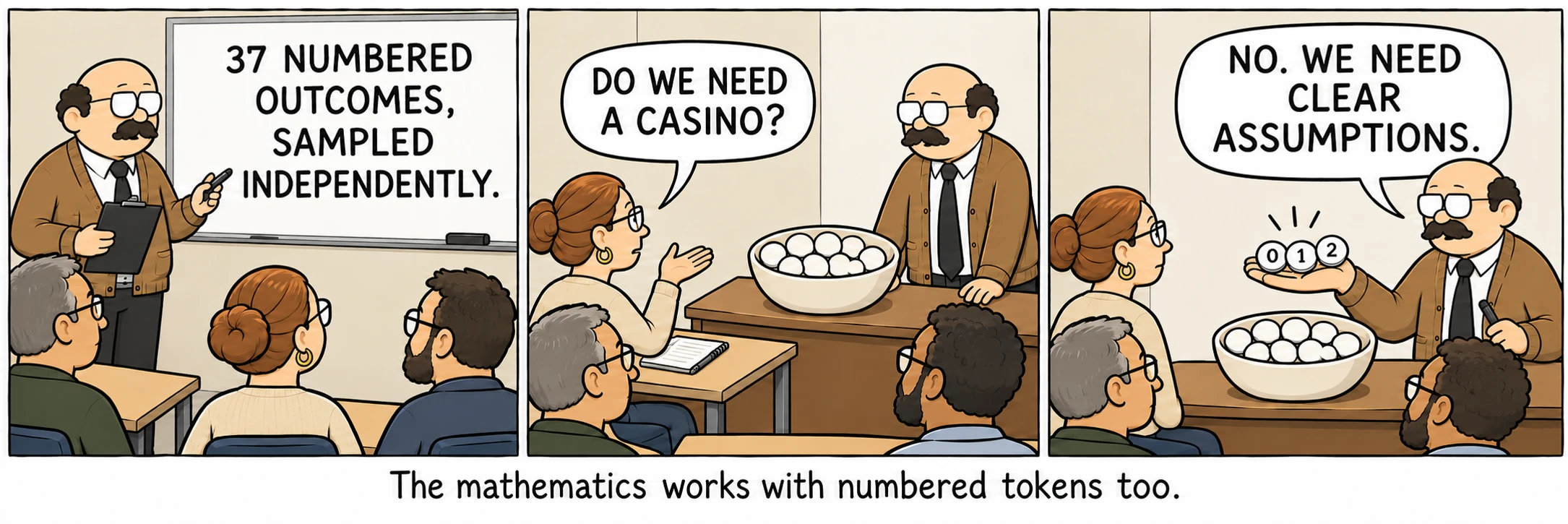
Maduo a le masome a mararo le bosupa, molemo o le mongwe, makgolo a mabedi a dingwaga a diphoso tse go ka ithutiwang mo go tsone.
Metswedi
- Feller, W. An Introduction to Probability Theory and Its Applications, Vol. 1.
- Ethier, S. N. The Doctrine of Chances: Probabilistic Aspects of Gambling.